All Episodes
Displaying 101–120 of 157 in total
Applying Industry Standards and Frameworks to Your Security Program
Standards and frameworks become useful when their requirements are translated into the organization’s security architecture, operating model, responsibilities, and evi...
Developing Effective Security Policies
Effective security policies establish organizational intent, authority, mandatory expectations, and the boundaries for standards and procedures. This episode explains ...
Writing Actionable Procedures and Guidelines
Policies define what must be achieved, while standards and procedures translate that direction into repeatable operating expectations and guidelines provide advice whe...
Developing and Using Information Security Program Metrics
Information security program metrics should help someone make a decision, not merely show that activity occurred. This episode explains how to define measures tied to ...
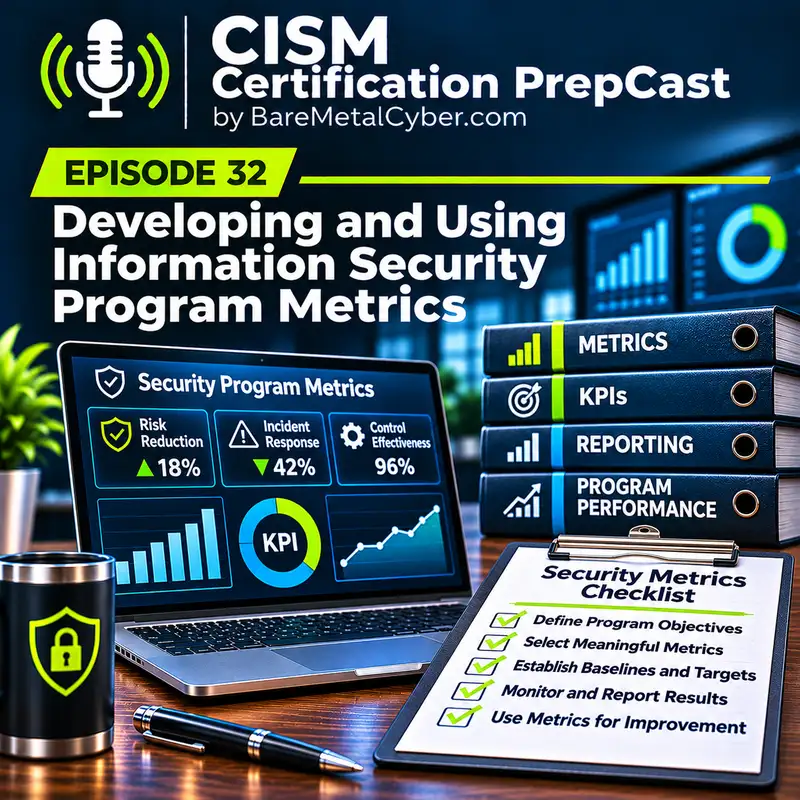
Designing and Selecting Effective Information Security Controls
Control design begins with a clear objective and risk scenario before any technology or procedure is selected. This episode examines preventive, detective, corrective,...
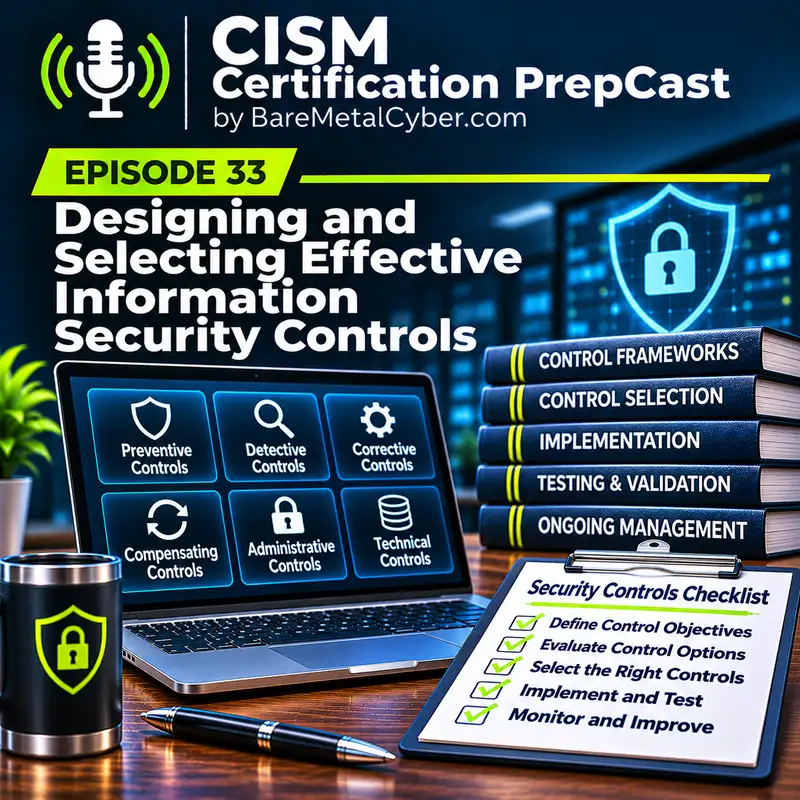
Implementing and Integrating Information Security Controls
A control does not become effective simply because it has been purchased, configured, or announced. This episode follows implementation through planning, ownership, te...
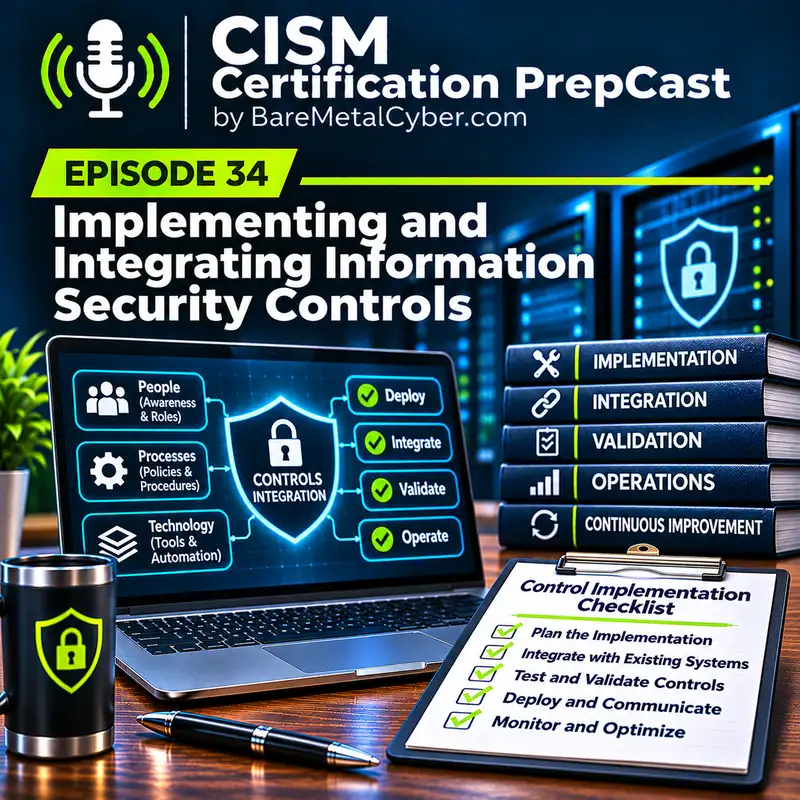
Techniques for Information Security Control Testing and Evaluation
Control testing evaluates whether safeguards are properly designed, implemented, and operating as intended across a representative scope. This episode explains test ob...
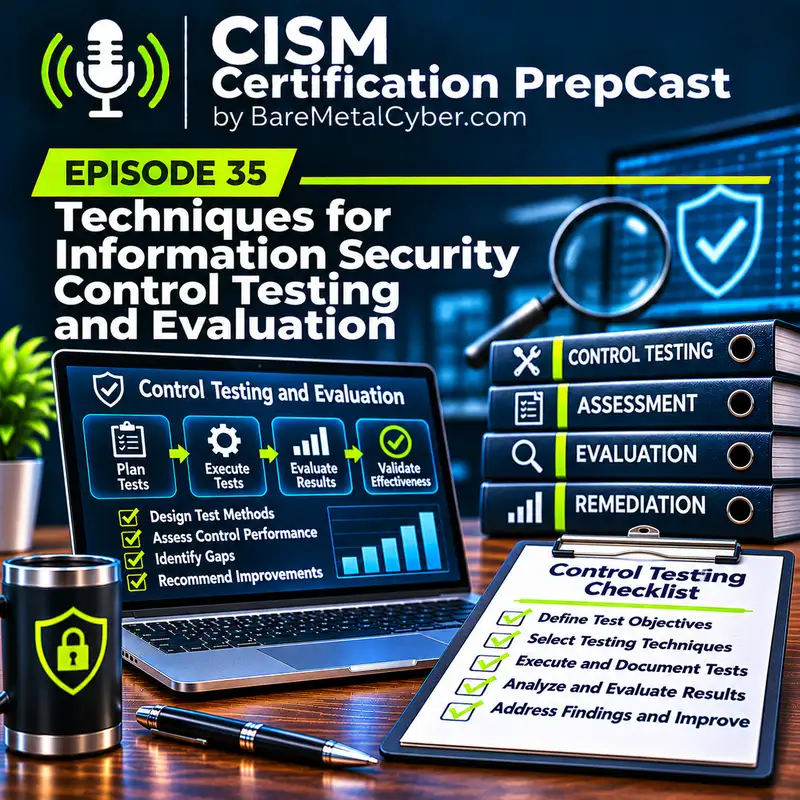
Developing Engaging Information Security Awareness and Training Programs
Security awareness and training are effective only when they change behavior relevant to real risks and responsibilities. This episode explains how to identify target ...
Vendor Risk Assessment and Selection
Vendor selection should begin with the business service, data, access, dependencies, and risks involved rather than a generic questionnaire. This episode explains risk...
Contractual Security Requirements and Ongoing Vendor Monitoring
Third-party security does not end when the contract is executed. This episode examines security requirements, service levels, incident cooperation, audit rights, evide...
Communications and Reporting for the Information Security Program
Program communication should provide the right audience with accurate information, material uncertainty, and a clear decision or action. This episode explains how to t...
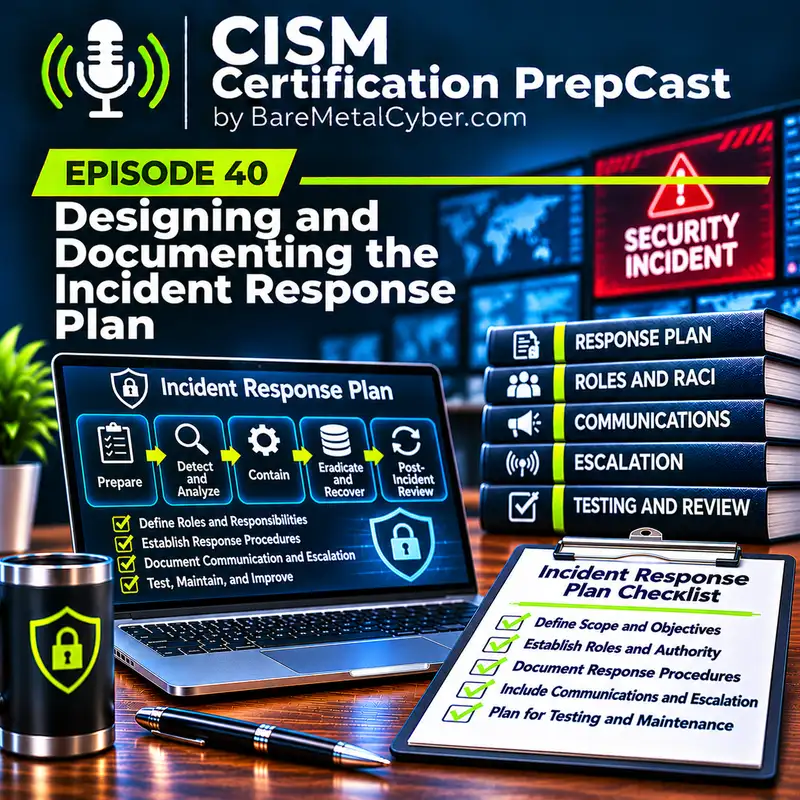
Designing and Documenting the Incident Response Plan
An incident response plan translates policy and authority into coordinated action before a crisis begins. This episode explains activation criteria, roles, command str...
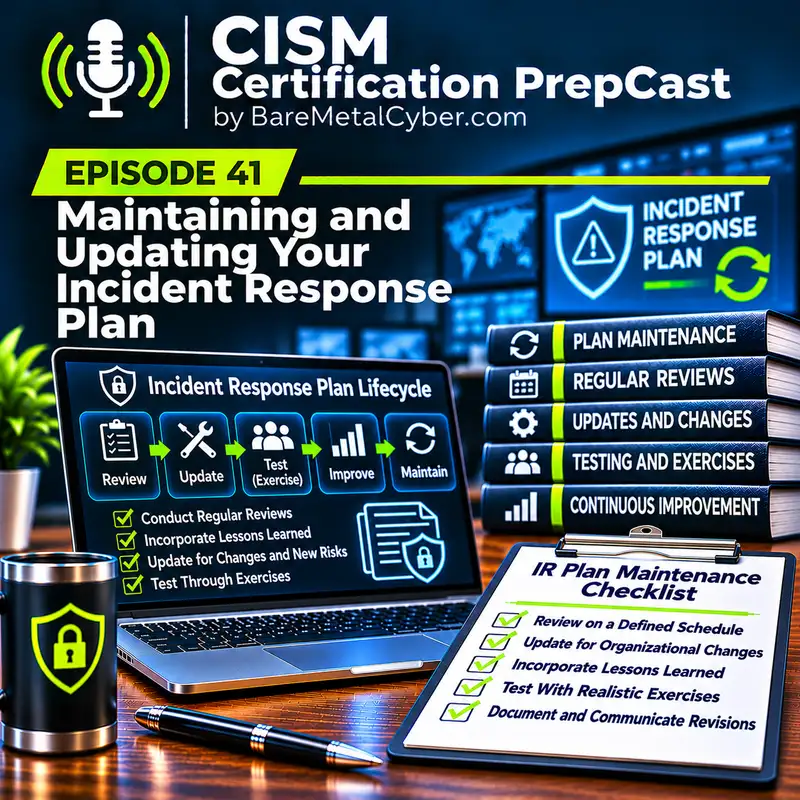
Maintaining and Updating Your Incident Response Plan
Incident response plans become obsolete when services, suppliers, architecture, personnel, obligations, or threats change without corresponding updates. This episode e...
Conducting Business Impact Analysis (BIA)
A business impact analysis identifies the activities, services, information, people, technology, facilities, and suppliers the organization must recover to limit unacc...
Building Your Business Continuity Plan (BCP)
A business continuity plan keeps prioritized business activities operating at an acceptable level during disruption. This episode explains how BIA results become conti...
Designing Your Disaster Recovery Plan (DRP)
A disaster recovery plan defines how technology services, data, infrastructure, and supporting components will be restored after a significant disruption. This episode...
Testing, Maintenance, and Improvement of Your DRP
Disaster recovery testing reveals whether documented strategies can achieve required outcomes under realistic conditions. This episode compares reviews, walkthroughs, ...
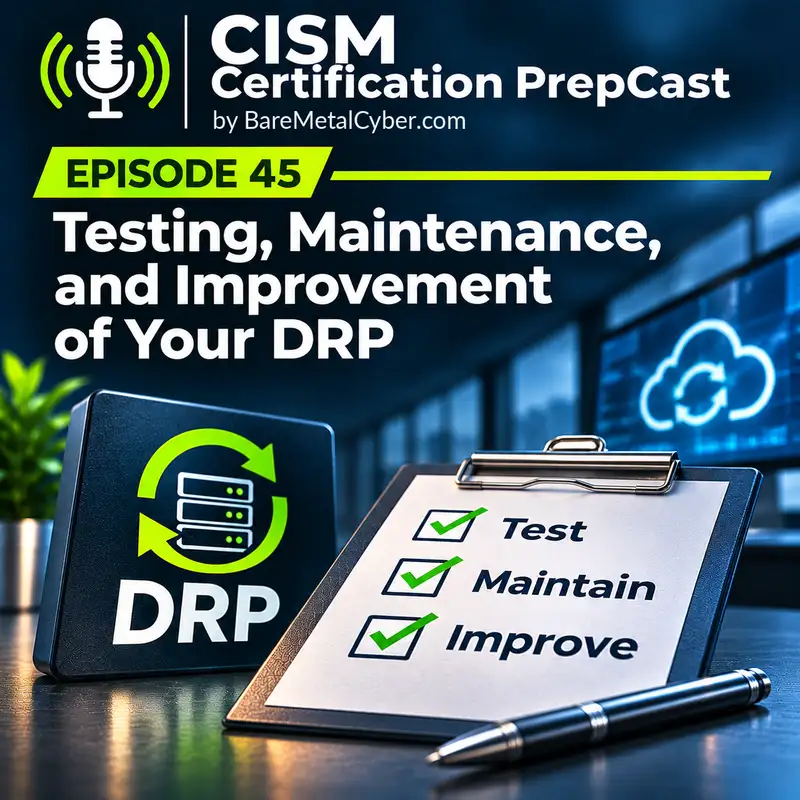
Incident Classification and Categorization Methods
Incident classification and categorization turn early information into decisions about priority, escalation, resources, and communication. This episode explains how im...
Training, Testing, and Evaluating Your Incident Management Capabilities
Incident management capability must be trained, exercised, measured, and improved before a real crisis demands it. This episode distinguishes role-based training, tabl...
Incident Management Tools and Techniques
Incident management tools support detection, investigation, coordination, containment, evidence, and reporting, but they do not replace authority or judgment. This epi...