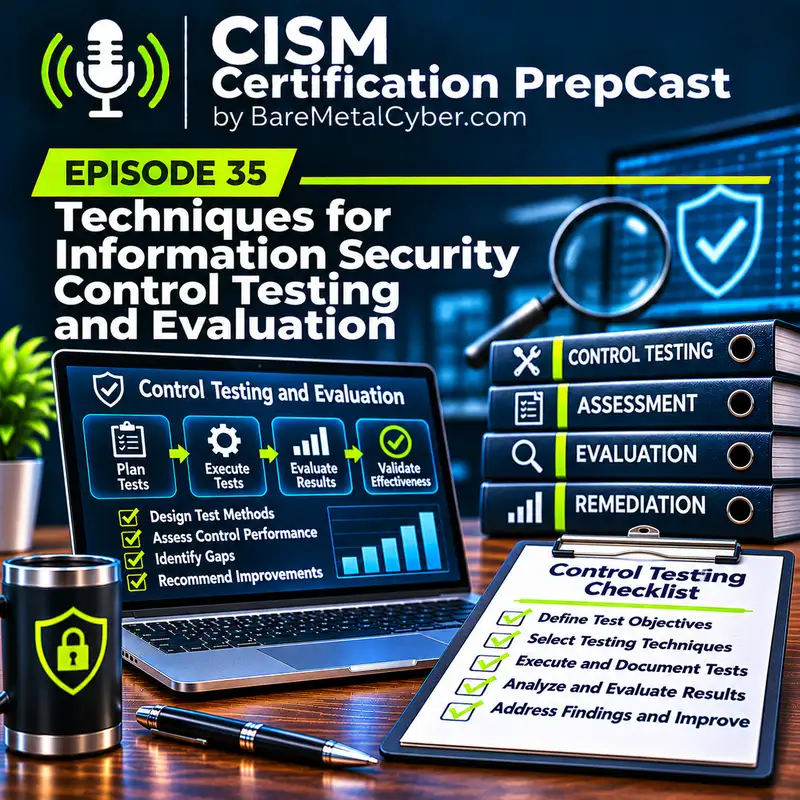
Techniques for Information Security Control Testing and Evaluation
Control testing evaluates whether safeguards are properly designed, implemented, and operating as intended across a representative scope. This episode explains test objectives, evidence sufficiency, reliability, sampling, interviews, observation, technical testing, exception ana…
CURRENT EDITION: CISM 2026. This episode is part of Season 2, the recommended course for the current certification exam.
Control testing evaluates whether safeguards are properly designed, implemented, and operating as intended across a representative scope. This episode explains test objectives, evidence sufficiency, reliability, sampling, interviews, observation, technical testing, exception analysis, and documentation of findings. It distinguishes isolated success from consistent operation and shows why evidence must be appropriate to the claim being made. The discussion also covers remediation ownership, risk-based prioritization, retesting, and verified closure. Security leaders learn to use testing as an assurance process that improves decisions rather than a ceremonial exercise that produces a passing label. Visit BareMetalCyber.com for more cybersecurity education, certification preparation, and practical security management guidance.