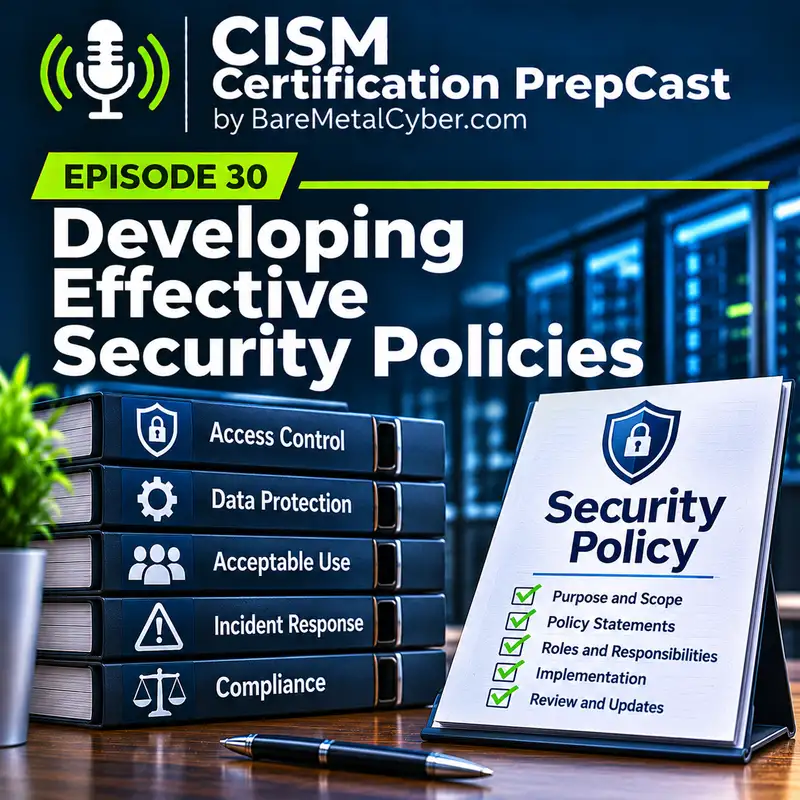
Developing Effective Security Policies
Effective security policies establish organizational intent, authority, mandatory expectations, and the boundaries for standards and procedures. This episode explains the policy hierarchy, common policy types, development lifecycle, stakeholder participation, content structure,…
CURRENT EDITION: CISM 2026. This episode is part of Season 2, the recommended course for the current certification exam.
Effective security policies establish organizational intent, authority, mandatory expectations, and the boundaries for standards and procedures. This episode explains the policy hierarchy, common policy types, development lifecycle, stakeholder participation, content structure, approval, version control, communication, exceptions, enforcement, and review. It emphasizes clear language, defined ownership, measurable controls, and alignment with business objectives and risk appetite. The discussion also shows why publishing a policy does not prove that people understand or follow it. Learners gain a practical model for creating policies that can be implemented, monitored, maintained, and defended during audits or incidents. Visit BareMetalCyber.com for more cybersecurity education, certification preparation, and practical security management guidance.