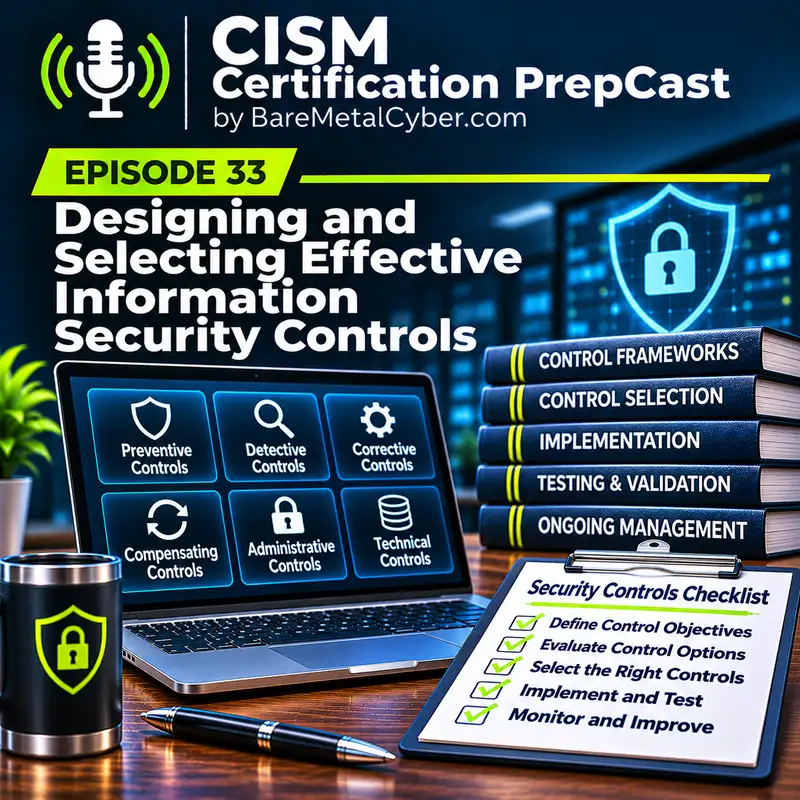
Designing and Selecting Effective Information Security Controls
Control design begins with a clear objective and risk scenario before any technology or procedure is selected. This episode examines preventive, detective, corrective, directive, deterrent, and compensating controls while focusing on how controls interact within a larger system.…
CURRENT EDITION: CISM 2026. This episode is part of Season 2, the recommended course for the current certification exam.
Control design begins with a clear objective and risk scenario before any technology or procedure is selected. This episode examines preventive, detective, corrective, directive, deterrent, and compensating controls while focusing on how controls interact within a larger system. It explains feasibility, dependencies, ownership, coverage, user impact, architecture fit, failure modes, and the evidence needed to evaluate performance. The discussion also distinguishes control objectives from specific mechanisms and avoids the assumption that more controls always mean better security. Security managers learn to select a balanced set of safeguards that addresses the actual risk and can operate within the business environment. Visit BareMetalCyber.com for more cybersecurity education, certification preparation, and practical security management guidance.