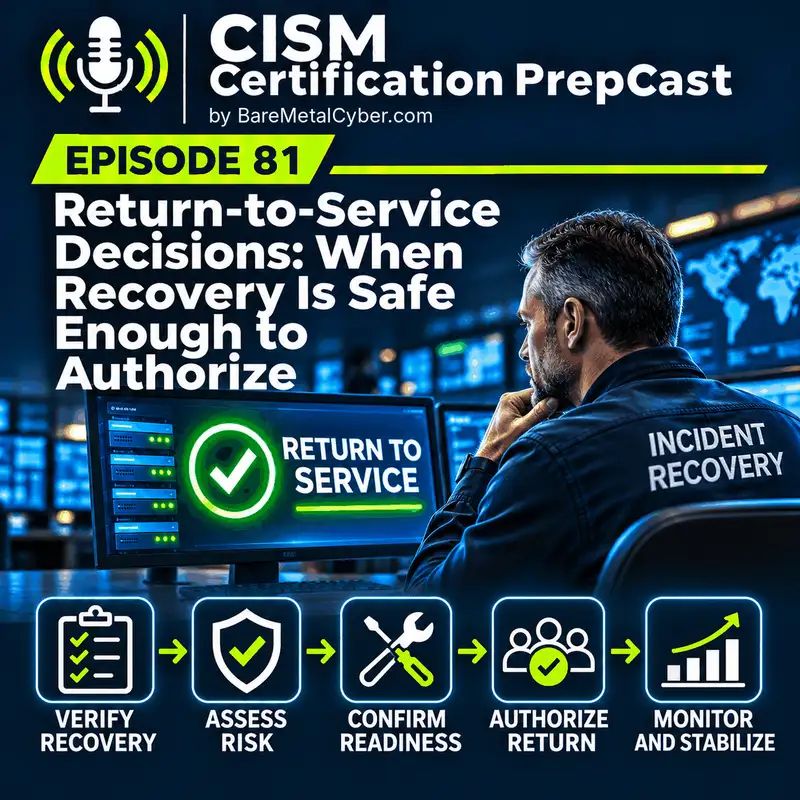
Return-to-Service Decisions: When Recovery Is Safe Enough to Authorize
Returning a service to operation is an authorized risk decision, not merely a technical declaration that systems are running. This episode follows recovery after containment and eradication, examining evidence of root-cause removal, data integrity, control validation, dependency…
CURRENT EDITION: CISM 2026. This episode is part of Season 2, the recommended course for the current certification exam.
Returning a service to operation is an authorized risk decision, not merely a technical declaration that systems are running. This episode follows recovery after containment and eradication, examining evidence of root-cause removal, data integrity, control validation, dependency readiness, business testing, monitoring, unresolved issues, and rollback criteria. It explains staged restoration, residual risk, temporary safeguards, and the roles of technical teams, incident leadership, and business owners. The discussion also covers communication and post-restoration observation. Learners gain a practical standard for deciding when recovery is safe enough to approve and what conditions must remain in place afterward. Visit BareMetalCyber.com for more cybersecurity education, certification preparation, and practical security management guidance.